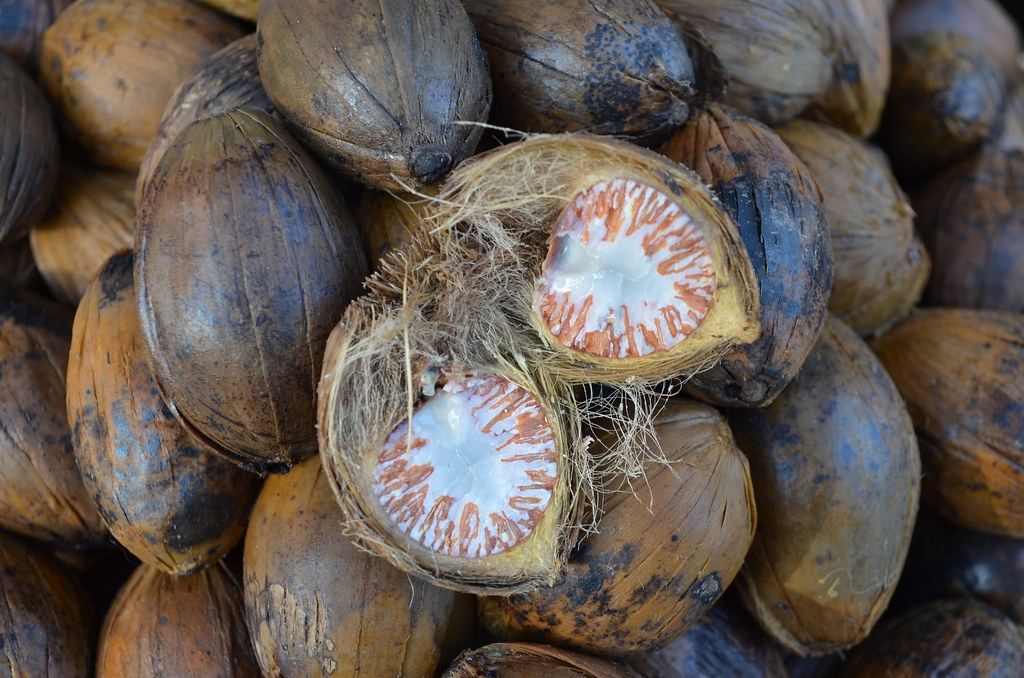
Betel seed, typically called Areca seed, stands as the seed of the Areca catechu tree and holds an essential part in the heritage and financial system of numerous Asian regions. The kernel is chewed for its energizing impact, particularly when mixed with paan leaf (a mix of betel vine and lime paste) or tobacco. Indonesia, as one of the largest growers of Areca nuts, has become a major participant in the global supply chain for this resource.
Throughout the Indonesian archipelago, consuming betel seed, identified as “sirih pinang,” has a longstanding tradition. It is often utilized in rituals, community events, and medicinal practices. In rural areas, notably in the island of Sumatra, Kalimantan, and the island of Sulawesi, the practice of chewing Areca seed is still strongly embedded. The nut bears social and cultural significance, typically functioning as a symbol of hospitality or integrated in customary rituals, like matrimonial events.
Financially, the farming of betel nuts offers means of income for a significant number of small-scale farmers, primarily in locations such as Aceh province, West Sumatran regions, and North Sulawesi. For local communities, betel nut functions as a important commercial crop, supplementing their earnings and occupying a key part in community economies.
Indonesia’s tropical tropical climate, productive land, and vast shorelines provide the optimum setting for Areca catechu palms to thrive. The agricultural practice is simple and requires significant labor, involving the planting of young palms, maintaining palm groves, and harvesting the nuts after roughly five years. After they are harvested, the betel nuts are generally dehydrated, heat-treated, or aged, based on the regional practices and the economic demand.
The betel nut suppliers in Indonesia features a varied production chain, comprising small-scale farmers, regional merchants, middlemen, and export companies. At times, Areca palm seeds are distributed fresh, but usually, they are dehydrated to ensure a longer preservation period and to accommodate the requirements of overseas markets.
International demand for Areca nut, notably in countries for instance the country of India, Pakistan, the island of Taiwan, and other parts of Southeast Asia, has increased in recent times. Areca nut is widely popular in those regions, where using betel is still a traditional habit, even with the growing awareness of its associated health dangers. The Indian market is the main purchaser of Areca nuts from Indonesia. The Areca nuts are processed in different forms, like intact nuts, cut nuts, or as powder, depending on the market requirements. The consumption of betel nut in traditional paan preparations remains widespread in the Indian subcontinent, and Indonesian Areca seed is generally liked for its high grade and availability.
Taiwan represents another growing market for betel nuts from Indonesia, where the habit of betel seed chewing is prevalent, especially among gents in provincial zones. Merchants from Taiwan prefer Indonesian betel nuts as a result of their lower prices in contrast to local production. Even with the financial prospects of the Areca nut industry, suppliers from Indonesia confront several challenges in enhancing their market reach and optimizing their supply chains.
In recent years, health studies have associated the consistent consumption of betel nuts with oral malignancies and various health issues, eliciting issues about its safety profile. This has resulted in some nations enforcing stricter regulations or or possibly forbiddances on the sale and chewing of betel nut products. For example, the Taiwanese government has rolled out strategies to limit the practice of chewing betel nut in light of rising oral cancer cases. Indonesian manufacturers, consequently, confront the difficulty of navigating these regulations while preserving their overseas markets.
Though the betel nut sector in Indonesia is extensive, it is missing uniform standards for quality control and standardization protocols. This can lead to variability in product quality, which impacts its global standing. Several producers have commenced embracing more thorough sorting, evaluating, and packaging techniques to provide steadiness, but the entire industry still has space for growth.
In the same way as many agricultural products, Areca nut farming brings up concerns about tree cutting and ecosystem degradation. In some regions, Areca palm plantations have expanded into once forest-covered lands, leading to a reduction in species diversity and disturbance of habitats. Resolving these environmental concerns is essential for the long-term viability of the market.
Indonesia is not the sole country manufacturing Areca nut. Other Southeast Asian regions, such as the kingdom of Thailand, Burma, and Sri Lanka, also have thriving betel nut markets. Indonesian manufacturers must maintain competitiveness by delivering high-quality products, streamlined supply chains, and advantageous pricing to retain their portion of the international market.
Despite the difficulties, the outlook remains bright for the Areca nut industry in Indonesia. The global demand for betel nut is foreseen to persist with strength due to the firmly established cultural habits of consumers in critical markets. Provided that countries like India and Taiwan persist to demand superior betel nuts, suppliers from Indonesia are strategically placed to address this requirement.
To secure ongoing development, suppliers of betel nuts in Indonesia are prioritizing modernizing their manufacturing processes, refining quality management, and investigating emerging markets. Some businesses are allocating resources to advanced systems and physical resources to enhance their operations and increase efficiency. Additionally, there is heightened interest in sustainably produced and ethically sourced products, which could create fresh opportunities for Indonesian suppliers prepared to embrace environmentally friendly methods.
The Indonesian betel nut industry is a important part to both the domestic and world economy. It delivers income to countless small-scale farmers and meets the needs of overseas markets, particularly in India and Taiwan. However, obstacles such as public health challenges, regulatory challenges, and market rivalry must be tackled for the industry to succeed in the future. By prioritizing sustainability, quality management, and advancements, Indonesian betel nut suppliers can keep to play a significant role in the international supply chain.
 Ilmu Berburu